
Blog / Service

Blog

All Service Auffenberg Ford Belleville Belleville Ford Dealer Research Sport Utility Vehicle Truck Auffenberg Ford, Inc. Service Belleville Ford Service Repair 2026 Ford F-150 2026 Ford Maverick Belleville Used Cars Bronco Sport 2026 Bronco Sport Fuel Efficient Ford Models
Ford Service in Belleville, IL

7 Signs Your Ford's Spark Plugs Need Replacement

Spark plugs are at the core of the combustion process, igniting the fuel hundreds of times each minute to generate the engine's power. While modern spark plugs are highly durable, these hard-working little components eventually wear out and need to be replaced. Here are the key warning signs that you should head to your local Ford dealership for prompt spark plug replacement. Falling Engine Power Without all cylinders firing away properly, bad spark plugs cause the engine to rapidly lose power. You'll find it more difficult to accelerate quickly and you'll no longer be able to reach top speeds on the highway. more Coughing and Shaking Engine As a spark plug fails, it ignites the fuel increasingly sporadically, and eventually, not at all. This spark plug failure is misfiring, which makes the engine sputter and shudder strangely, clearly struggling to keep going. Roughness While Idling When waiting at an intersection, your idling engine is under more pressure than usual. If one or more spark plugs are misfiring, this idling will become rough as your engine tries to stay alive. It might even stall. Knocking Sounds When healthy, spark plugs ignite the fuel in perfect rhythm with the opening and closing cylinders. But when a spark plug starts to misfire, the fuel can ignite too early or late, which creates a distinct knocking sound, and sometimes loud backfiring. Hesitant Engine Starts Without all spark plugs working properly, your engine might become slow to start in the mornings. This issue will become even worse during winter when the battery, starter, and engine are already under more strain from the cold. Worsening Fuel Efficiency Bad spark plugs cause an engine to become less efficient overall. You'll be traveling less far for each gallon of gas you use. And over time, your gas mileage will get considerably worse until you have the fault fixed. Smoke in the Exhaust Fumes When a failing spark plug doesn't ignite all the fuel that's being injected into the combustion chamber, this unburned fuel can start leaking back into the exhaust pipes. Therein, the fuel will often ignite or partially ignite, turning into thick black smoke, which you'll notice pouring out of the tailpipe. Get Prompt Spark Plug Replacement at Your Local Ford Dealership If your spark plugs need attention, don't delay with repairs lest the problem worsens and causes more faults in other areas of your car. Our experienced technicians can quickly diagnose the cause of your failing plugs, carrying out necessary repairs and replacements. Visit Auffenberg Ford, Inc. in Belleville, IL, today to have your spark plugs replaced and your engine tuned up. At our local full-service dealership, you can find a broad inventory of top-notch vehicles plus comprehensive automotive maintenance and repairs.
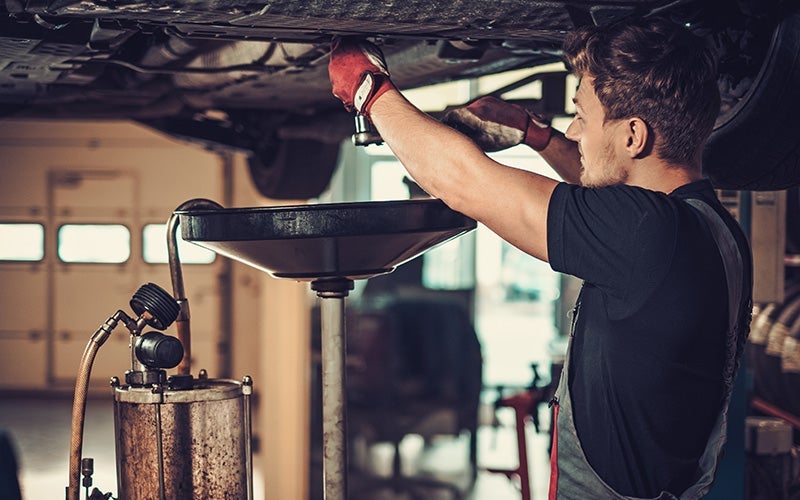
A service technician performing an oil change on a vehicle that is up on racks in a bay.

Is Your Ford Due for an Oil Change?

If there's one vehicle service you wouldn't want to miss, it's changing the oil. Even slight degradation in motor oil diminishes its ability to lubricate, clean, and protect your car's engine. This means permanent wear and tear to the engine's internal components, which hinders the power, performance, and longevity of your car. If you notice the following indications of engine trouble, head to your local Ford dealer right away for an oil change. more Your Indicator Light Every modern vehicle has a dashboard indicator light that lets you know when it’s time to get your oil serviced. For most vehicles, it appears every 10,000 miles or so, but this can vary widely depending on the individual vehicle’s make or model. If you see the oil change indicator light (which looks like an oil can), get in for service. Knocking Sounds The primary job of motor oil is to keep the many moving parts fully lubricated. But as oil ages and fills with contaminants, it starts to thicken and turn into sludge, compromising its viscosity and losing its lubricating properties. This causes the pistons, rods, shafts, pushrods, and valves to rub and knock against each other, generating friction and knocking noises. If you hear tapping, banging, or knocking coming from your car's engine compartment, pull over and check the oil; it may need to be changed at once. Strange Vibrations When an unlubricated engine starts to struggle, you'll feel the car vibrating strangely. These excess vibrations are likely to be more noticeable when you're idling. Smell of Burning If your motor oil leaks, you may smell it burning as it drips onto heated engine parts. Low or degraded oil can cause overheating as well, which may also generate a burning smell. Overheating Engine The motor oil aids the coolant in controlling the engine's temperature. Therefore, if your oil reduces, leaks, or deteriorates, your car is more likely to overheat. This will cause the engine power to plummet and the dashboard's engine temperature gauge to shoot up. You might also hear loud ticking sounds and see white vapor rising from under the hood. Blue Exhaust Smoke Sometimes, oxidized oil can leak past the valve seals or piston rings into the combustion chambers. Therein, it burns alongside the fuel, potentially causing strange bluish smoke to escape from the tailpipe. Thick, Grimy Oil It's wise to periodically inspect your motor oil. If the oil is darkened and grimy, clearly filled with dirt and particles, have it refreshed. Motor oil continually collects contaminants from the engine, sweeping all debris into the oil filter. This filter needs to be changed before it fills up; otherwise, the collected debris will reenter the oil, leading to rapid degradation. Change Oil Twice a Year at Your Ford Dealer Even the most diligent drivers might occasionally forget to change their oil during a busy period. We can help you avoid this risk. When you schedule oil servicing with us, we can remind you whenever your next servicing call is approaching. Visit Auffenberg Ford, Inc. in Belleville, IL, for prompt, courteous vehicle maintenance and repairs. We offer a one-stop shop for all your Ford-related needs, whatever they are.

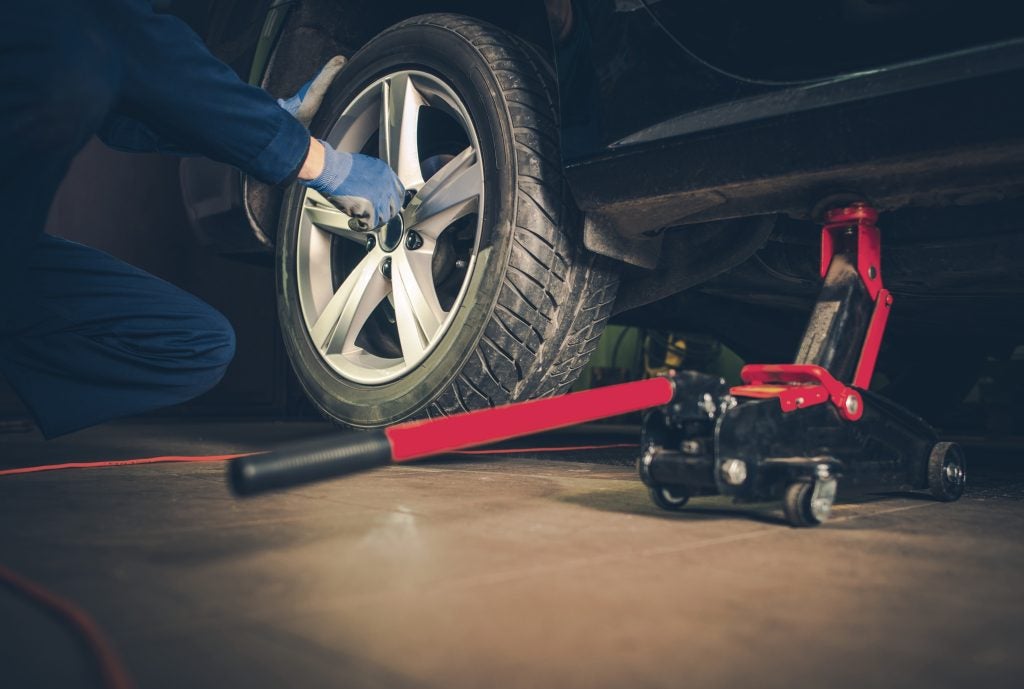
A service technician removing a tire.

Need New Tires? Visit Your Ford Dealership

When it comes to road safety, the condition of your tires is all important. As the only point of your car in direct contact with the road, your tires need to handle a great deal of pressure while maintaining firm traction on all surfaces, at all speeds. So if you ever experience one of the following issues, visit your local Ford dealership right away for new tires. more Treads Too Shallow for Safe Driving When the treads of your tires near 2/32 of an inch, the legal minimum in most states including Illinois, it's time for replacements. It's a good idea to check the depths of your tire treads each time you check the air pressure. That way, you'll also notice uneven tread wear, which usually means you need to rotate your tires.  You can do this with the “Abe” test. Put a penny into your tire, head down, and if you see the top of Abe’s head, your tread is too low! Bubbles, Bulges, or Blisters in the Rubber If one of your tires suddenly sports a strange bulge, bubble, or blister, it probably needs to go. External bulges often indicate serious internal damage caused by a heavy knock against a curb or pothole. When the internal tubing ruptures, air can escape and become trapped under the outer layer of rubber, forming a bulge. Cracks, Cuts, or Embedded Objects With most tires, tiny cracks appear in the sidewalls over time as the rubber steadily dries out. These cracks become hazardous when they grow noticeably deeper and longer. Deep cuts anywhere on a tire might also mean it's no longer safe to drive on. Likewise, embedded objects should be removed to see how deeply the tire has been punctured. Ask a technician to diagnose the severity of any such damage. Mysteriously Dropping Air Pressure If your car's automatic air pressure monitor indicates that one of your tires is continuously losing pressure, you'll probably need to have that tire replaced. Inexplicable air loss may point to a hidden puncture or some other fault with your tire, air valve, or wheel rim. Odd Vibrations or Road Noise When tires become excessively uneven or damaged, you're likely to notice strange vibrations, especially when driving at higher speeds. You may also hear a change in the quality of road noise. Always trust your senses in this matter, and ask a technician to check your tires. Rotate Your Tires Twice a Year or More One of the most important tire maintenance services is to have tires rotated twice a year. This evens out tire wear and keeps your tires in great shape for longer. It also gives the technicians a chance to inspect your tires for potential problems that might be causing your tires to wear unevenly. Have your car tires rotated or replaced today at Auffenberg Ford Belleville in Belleville, IL. We're a local full-service dealership offering a one-stop shop for all your vehicle-related needs, whatever they may be.

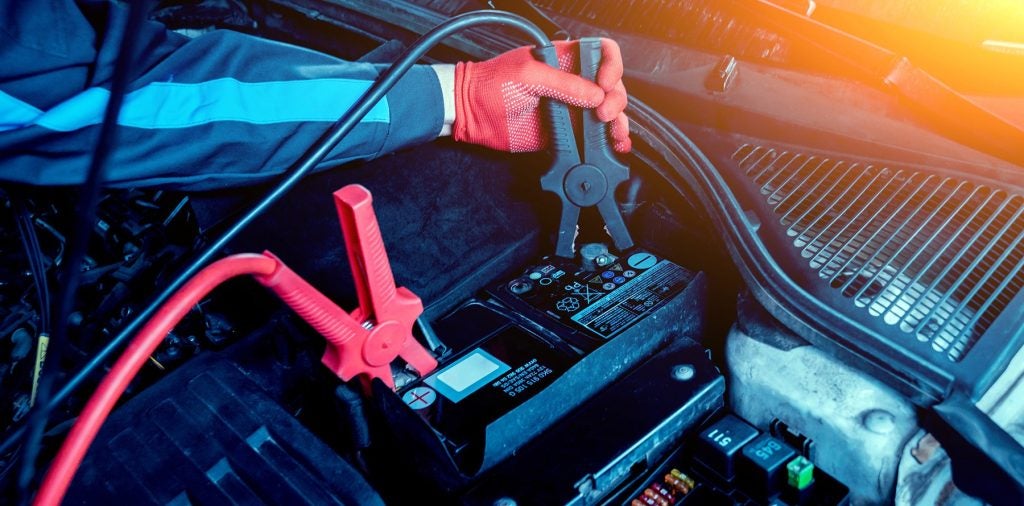
An image of jumper cables being affixed to a car battery.

3 Signs Your Ford Needs a New Car Battery

It's no surprise to anyone that a car's battery might give out, and though we all hope that it doesn't happen at a bad time, it's important to stay ahead of potential dangers by knowing the signs. While warnings may differ from model to model, here are a few ways to tell when you should come down to see us at your local Ford dealer and pick up a new car battery. more Electrical Difficulties First off, weakening batteries can weaken the vehicle's electrical systems. These problems can be totally car-related, like slowed headlights or slowed interior lights, or battery-based, like in the case of overcharging. Batteries that overcharge are then far more prone to becoming damaged; the amount of power running through them is massive, and, if not reduced by the assistance of the alternator, at risk of boiling the solution inside the battery. In the same vein but on the opposite end, weakening batteries require more jump-starts than strong ones do as they just can't hold a strong charge anymore. While many cars demand a jump-start now and then, if it's happening all the time then your battery is probably dying. There's also the slow-crank problem; an engine that sounds like it's toiling to start is another sign that you need a new battery, as battery-drain is one of the major causes. Visible Damage While a little bit of corrosion can be easily handled through cleaning, more significant cases of wear-and-tear are another good sign that a battery's time has come. A battery that has become damaged enough to lose its original shape (or a battery that has become swollen, and is therefore notably deformed) is not only at risk of breaking down, but could also totally rupture, presenting a danger to the car's systems as well. Time and Age In some cases, it's helpful to replace the battery by just staying ahead of the curve! A Ford battery can generally be expected to last some three to five years, and batteries that have been in use longer than that need constant looking out for.  An experienced technician may be able to glance at your battery's voltage and keep you informed about its health, or lack thereof, and thus help you to determine when it ought to be replaced. Think you may have a damaged or defunct battery but aren't entirely sure? Come see us at Auffenberg Ford Belleville and let our service department give your battery a check-up. Our technicians are experienced, friendly, and well-prepared to give both your battery and your vehicle any help that they might need.

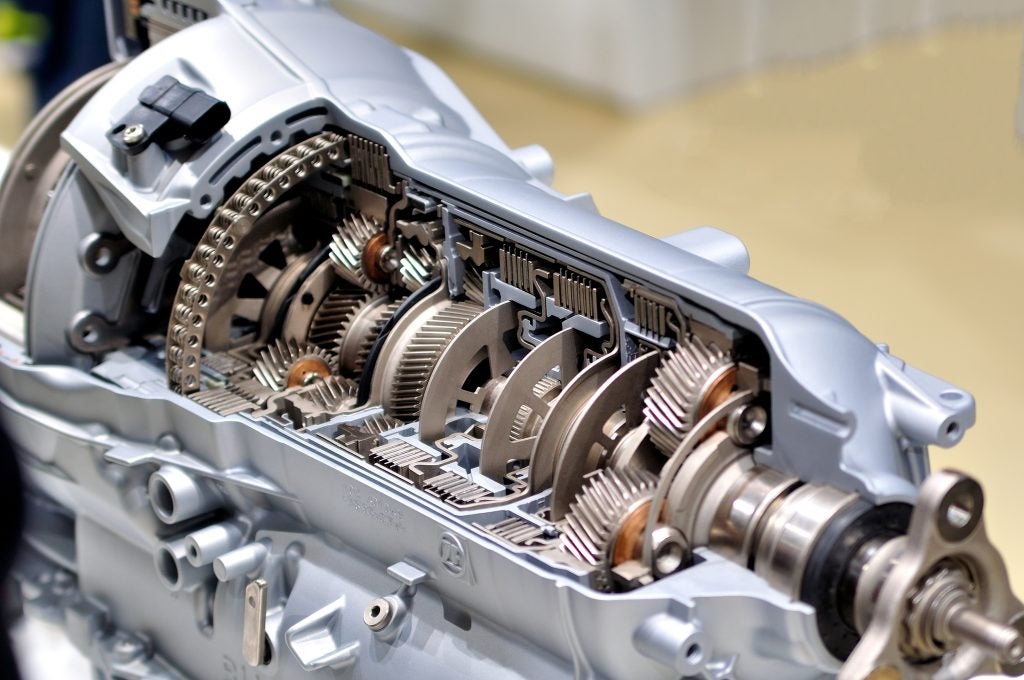
A cutaway photograph of a car transmission, showing all the working parts.

Recognizing When It's Time for Transmission Service for Your Ford

Have you noticed strange grinding or whining sounds from below when you shift gears? Are your gears less smooth, delayed, or even refusing to shift at all? Is there a puddle of red fluid under the front of your car? If you're experiencing any of the transmission problems laid out below, it's time to visit your local Ford dealer for prompt transmission service and repair. more Whining or Grinding Sounds When in good shape, transmissions should shift smoothly and silently. If you hear whining sounds, your gearbox might have insufficient lubrication. You'll need to have the transmission fluid, lines, filter, and pump inspected for faults. Metallic grinding might indicate more serious trouble as gears or other moving parts are rubbing roughly against each other. Clunking or gurgling sounds also shouldn't be ignored. Delayed Gear Engagement Delayed engagement means that the gears take a few seconds longer than usual to fully engage after you shift. As gear shifting should be instantaneous, any delay indicates a potentially serious problem. There might be an issue with the solenoid, seals, bands, pump, filter, or gear sets. A technician will need to diagnose and repair the fault. Slipping or Sticking Gears If your engine starts revving loudly when you shift gears, or you find it hard to accelerate, then your gears might be slipping. A slipping transmission can also cause the gears to suddenly slip into neutral all on their own, which is hazardous while on the road. Slipping might be caused by a worn-out clutch, or by a number of other malfunctions. Likewise, gears that stick and refuse to shift at all are usually a serious sign of gearbox trouble. Leaking Transmission Fluid Transmission fluid is essential for proper gearbox performance. If your transmission fluid ever leaks, you might notice a clear, pink, red, or light brown fluid pooling under your car. You can use the dipstick to check the level of transmission fluid. If it's low, you'll need to have it topped up. If it's a dirty brown color, you'll probably need to flush and replace it with fresh fluid. Burning Smells in the Cabin Transmission fluid is very durable but gradually wears down over time and can eventually start to burn in the heat of the transmission. If this occurs, you might detect a burning smell in the cabin above. Your burning transmission fluid will need to be changed. How Often to Have Transmission Servicing at Your Ford Dealer Transmission fluid typically needs to be flushed every 60,000 to 100,000 miles for most drivers of automatic vehicles. If you have a manual car, you'll need to flush your transmission fluid every 30,000 to 6,000 miles. During your routine maintenance visits, ask a trusted technician to keep an eye on the condition and level of your transmission fluid. Visit Auffenberg Ford Belleville in Belleville, IL, today to have your transmission checked and serviced by qualified professionals. We're a local full-service dealership offering the region's drivers high-quality vehicles, deals, and customer service.

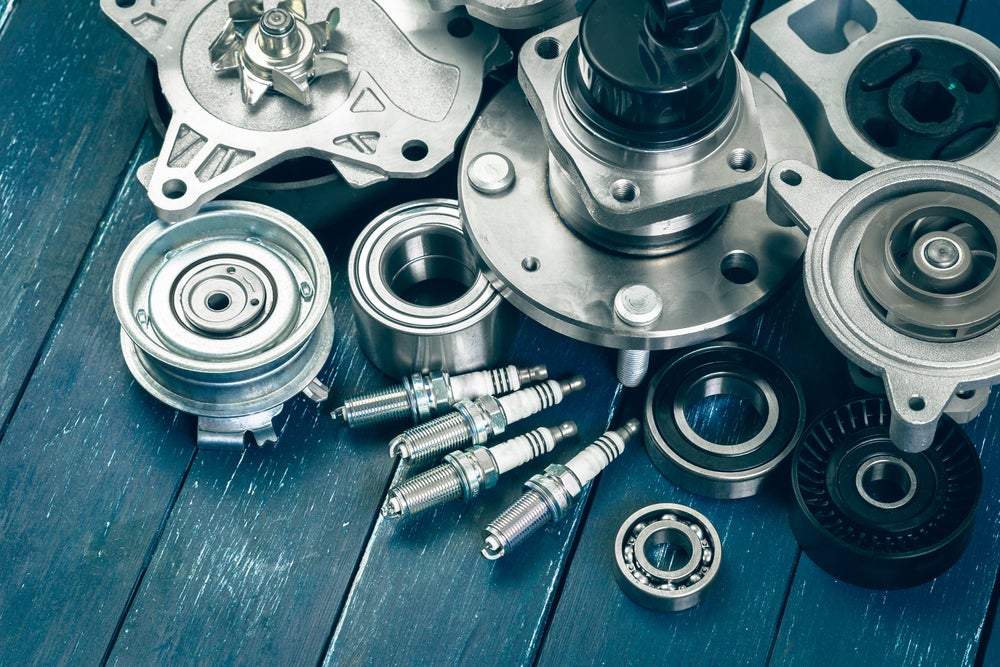
An image of a collection of new car parts sitting on a wooden table or bench.

Why OEM Parts Are Crucial for Your Ford's Performance

When facing a vehicle repair job, it's seldom wise to cut corners with a sub-par aftermarket car part. Original Equipment Manufacturer (OEM) parts are higher quality, more durable, more compatible with your car, have better warranties, and can save you money in the long run. Here's a detailed guide to not only why OEM parts are crucial for your Ford’s performance, but the many other benefits of opting for genuine OEM parts at your local Ford dealership. more Your Peace of Mind Is Protected by a Superior Warranty Let's talk about warranties. Many drivers appreciate the reassurance offered by a robust and generous warranty when purchasing a new car part. You can probably guess the reason why OEM warranties are usually far superior to the warranties that (occasionally) come with generic parts. It's because OEM car parts are simply better and more reliable in every way. The manufacturer, Ford, is happy to guarantee that they'll handle any defects or issues directly because faults are so rare. OEM Car Parts Are Perfectly Compatible with Your Car With an OEM car part, you're installing exactly the same component that came with the original vehicle. You're guaranteed a perfect fit, just as Ford's engineers intended. By contrast, with generic car parts, the technical specifications are often slightly off, which can lead to all kinds of problems later on. You Get Consistently High Quality with OEM Components OEM car parts meet Ford's high production standards, just like all the parts of your car when it was first assembled. With generic parts, there are no such standards of quality. And once a poor-quality aftermarket part is installed, it often won't take long to notice the difference. Your Vehicle's Longevity Is Bolstered by OEM Components Over time, wear and tear are minimized when all the parts are genuine Ford parts. This is because when you use all OEM parts, they work in perfect unison as designed. When you start installing random generic car parts, on the other hand, wear and tear is often increased. This can shorten the overall lifespan of your vehicle. You Save Money in the Long Run with OEM Car Parts Some drivers are tempted to cut short-term costs with cheaper generic car parts. However, this can often lead to greater expenses over time because these cheaper parts don't last as long as OEM components, meaning you need to replace them more frequently. Aftermarket parts can also increase the number of required repair jobs with other connected car components. Learn More at Your Local Ford Dealership You can find out more about the superior quality of OEM car parts at your local dealership. The technicians will be happy to explain why it makes sense to install a new part that's stamped with the reputable Ford brand. Visit Auffenberg Ford Belleville in Belleville, IL, today to have genuine car parts installed in your vehicle by qualified professionals. We're a local full-service dealership offering excellent vehicles, deals, financing options, and customer care.

A smiling African-American automotive service professional in coveralls and holding two ratchets, standing in front of two vehicles in a repair bay.

5 Services Offered by Your Ford Dealer

As your local Ford dealer, we're the experts on Ford service and maintenance needs for your vehicle. Whether you need a routine oil change or a new alternator, we can help. From keeping you on a regular maintenance plan to run like new for many years, to taking care of you post-accident or for major recalls and repairs, learn five services offered by your local Ford dealer, and where you can go to get your car back in shape. more 1. Ford Service and Maintenance Our Ford service department can take care of your Ford whether you need repairs, preventative maintenance, or a vehicle inspection. We offer oil changes, brake pad and rotor replacements, fluid top-ups, engine air filter changes, and tire rotations. When an indicator light comes on or your Ford isn't driving like normal, we're here to help you get back on the road. Our technicians provide AC and heater services, cooling system and radiator repairs, transmission services, and repairs and replacements for alternators, starters, and struts. When you need a new battery, we can help with that, too. 2. Oil Change Service Oil changes are a fact of life when you own a vehicle. Many Ford vehicle manuals suggest changing it every 7,500 miles. Instead of guessing, let your Ford tell you when it's time for an oil change. Your Ford may be equipped with an Intelligent Oil-Life Monitor System. You'll see a message on your dash when you need to schedule an oil change. You can also talk to our service center about getting on a routine maintenance schedule so you never have to worry about it. 3. FordPass FordPass is a smartphone app that lets you stay connected to your Ford vehicle, no matter where you are. While it offers plenty of remote functions like starting your vehicle and locking and unlocking your doors, it's also designed to help keep your Ford running well. From the FordPass app, you can check your fuel level and the oil life in your Ford. You can receive vehicle health alerts in the app, and contact Ford's Roadside Assistance if you get stuck on the side of the road. 4. Ford Pick-Up and Delivery Our dealership participates in Ford Pick Up and Delivery, a complimentary service for Ford owners. Depending on where you live, we'll pick up your Ford and bring it to the service department. When we're done working on it, we'll drop it back off to you. Your vehicle must be operational to be eligible for this service. 5. Tire Service When you bring your Ford in for routine maintenance, we'll rotate your tires to extend their life as long as possible. We'll also check your tire treads each time to let you know how much life is left in them. Depending on what you drive, your tires could last as long as 70,000 miles before they need to be replaced. When it's time for new tires, we'll recommend the best options for your driving needs and install them for you. Taking care of your Ford with routine maintenance and repairs as needed will keep it on the road longer. Call Auffenberg Ford Belleville in Belleville, IL to find out how we can get your Ford running like new.

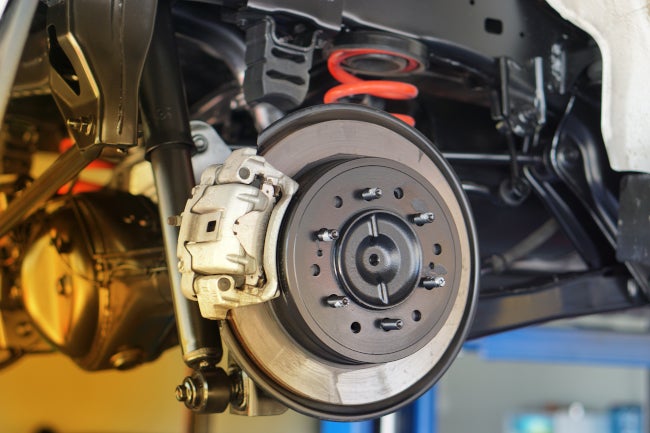
An image of new brakes applied to a vehicle.

5 Signs Your Ford Needs a Brake Repair

The brakes are the single most important safety feature in any car, so you should always contact your Ford dealer ASAP when you need a brake repair. To make sure you always contact the dealer promptly when something is wrong, it's a good idea to learn the signs that your brakes need some attention. more Signs Your Brake Pads Need to Be Changed The brake pads need to be changed periodically, though how frequently yours will need to be changed depends on several factors. There are several signs the pads need to be changed, and they're typically easy to recognize. Here are some signs to look out for: Brake pedal has no resistance or feels soft Squealing or grinding sound when you brake Vibration when you brake Brake pad indicator light comes on The vehicle starts to pull to one side or another 1. The Brake Pedal Has No Resistance When you don't feel resistance when you apply the brake pedal, it means there's a problem with your vehicle. If you activate the parking brake and don't feel any resistance while doing that, either, then it also means there's a problem. Often, a lack of resistance when you apply the brakes indicates a brake fluid leak or an air leak in one of the brake hoses. 2. The Brake Pedal Makes a Squealing or Grinding Sound There are several reasons why a brake might squeal – dust can sometimes get in the pads, for example. But if the squealing is loud and occurs regularly every time you step on the brakes, or worse, you hear (or feel) a grinding when you step on the brakes, it could be a sign your brakes are critically low. 3. The Car Vibrates When You Brake Vibration isn't just a symptom of having worn-out brake pads. It can also be a sign that your brake pads can't grab the rotors' surface evenly due to warped rotors. The vibration will happen during regular braking and not just panic braking, but the vibration may feel similar to the vibration caused by anti-lock braking during emergency stops. 4. The Brake Pad Indicator Lights Up If you see a dash indicator light up that indicates your brakes are low, this is a definite sign it’s time to get them checked. Many new cars have a sensor that triggers such an indicator and when you see it, you should never ignore it. 5. The Vehicle Is Pulling Your car may sometimes pull to one side when you apply the brakes. This is a sign that your brake linings are not wearing down evenly, so you need a brake adjustment as soon as possible. Sometimes foreign matter in the brake fluid can also cause your vehicle to pull to one side when you hit the brakes, so make sure you stay on top of your fluid changes. Pay a visit to Auffenberg Ford, Inc. in Belleville, IL when your brakes are having problems. Be sure to stop by for regular brake service such as fluid changes and brake pad replacements, too.

Contact Us

Fill out this form below and we'll contact you shortly
*Required Fields